
Goal
Help students understand Dalit women’s lived experiences and how caste and gender shape education, identity, dignity, and belonging.
Stories
Learning Objectives
- Understand why education is important in the lives of Dalit women.
- Explain how caste and gender can shape access to schooling, confidence, and opportunity.
- Recognise education as a path toward dignity, voice, and self-respect.
- Reflect on how learning can help individuals and communities challenge social inequality.
Historical Background
Dalit women’s educational experiences have often been shaped by both caste and gender. Many Dalit girls faced barriers such as poverty, discrimination, family responsibilities, and unequal treatment in school. For many Dalit women, education was not only about getting a job. It was also about gaining dignity, confidence, voice, and the ability to question unfair social systems.
Story: A Book in Her Hands
This classroom story is inspired by Bama’s autobiographical work Karukku and Shailaja Paik’s research on Dalit women’s education. She still remembered the feeling of holding her first schoolbook. It was not new or fancy. The corners were a little bent, and the pages were simple. But to her, it felt special. It felt like a small door opening.
Every morning, she walked to school with her book held close to her chest. She wanted to read, write, and answer questions like the other children. She wanted to sit in the classroom and feel like she belonged there. But school was not always easy.
Some days, she felt that people saw her caste before they saw her as a student. Some people looked at her differently. Some words made her feel small. Sometimes she felt she had to work harder just to prove that she deserved to be there.
At home, there were also many responsibilities. There were chores to finish, younger siblings to help, and family worries that often came before schoolwork. Some people around her wondered why a Dalit girl needed so much education. They thought girls should learn only enough to manage home and family duties.
But she kept going. There were days when she felt tired. There were days when she wanted to stay silent. But every time she opened her book, she felt a little stronger. Every new word gave her confidence. Every lesson helped her understand the world more clearly.
Slowly, education gave her words for things she had always felt but could not explain. She began to understand that the problem was not who she was. The problem was a society that treated some people as less important because of caste and gender.
Her book became more than a schoolbook. It became a symbol of hope. It told her that she could think. She could question. She could speak. She could dream of a life beyond the limits others had placed around her.
Education did not remove every difficulty from her life. It did not make discrimination disappear in one day. But it gave her confidence. It helped her understand her dignity. It helped her see that Dalit women were not only people who faced injustice. They were also learners, thinkers, writers, mothers, daughters, workers, leaders, and storytellers. For her, education was not only about passing exams. It was about being able to say, “I am here, and my life has value.” That is why education matters to Dalit women. A book in her hands can become a quiet form of strength. It can help one girl find her voice, and it can help a whole community move toward dignity, confidence, and hope.
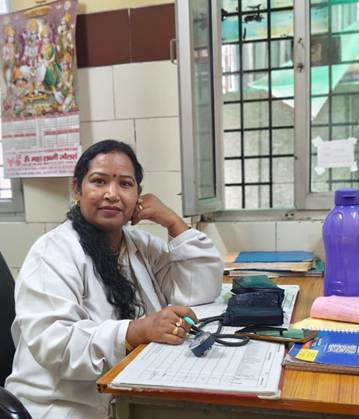
Figure 1: The Power of Education: Government Hospital in Delhi, India
Note. My mother works as a nurse at a government hospital in Delhi. I included this image because her journey shows the power of education in her life. She is an inspiration not only to me and my sister, but also to many women in the Dalit community, showing how education can lead to dignity, confidence, and independence.
Illustrated Learning Page
Sociology Connection
This chapter connects with Grade 11 Sociology topics including caste, gender, education, identity, social inequality, dignity, empowerment, and social change.
Discussion Questions
- Why was education important to the girl in the story?
- How did caste and gender affect her school experience?
- Why can a book become a symbol of dignity and hope?
- How can education help people question unfair social systems?
- Why is it important to learn from Dalit women’s voices and experiences?
Reflection Activity
Write one paragraph explaining why education matters to Dalit women. In your answer, include how education can support dignity, confidence, voice, and social change.
References
Bama. (2012). Karukku (L. Holmström, Trans.). Oxford University Press. Original work published 1992. https://global.oup.com/academic/product/karukku-9780199450411
Paik, S. (2009). Chhadi lage chham chham, vidya yei gham gham: Dalit women’s struggle for education. Indian Economic and Social History Review, 46(2), 175–204. https://doi.org/10.1177/097152150901600202
Rege, S. (1998). Dalit women talk differently: A critique of “difference” and towards a Dalit feminist standpoint position. Economic and Political Weekly, 33(44), WS39–WS46.
Learning Objectives
- Understand Savitribai Phule’s role in supporting girls’ education.
- Explain why education was a powerful step toward equality and dignity.
- Recognize how caste and gender created barriers for many girls and women.
- Reflect on how one teacher’s courage can create change for future generations.
Historical Background
Savitribai Phule was one of the earliest women teachers in India and a major social reformer. In 1848, she and Jyotirao Phule started a school for girls at Bhide Wada in Pune. At a time when many girls, especially girls from marginalized communities, were denied education, Savitribai’s work challenged both caste discrimination and gender inequality.
Story
The Teacher Who Opened the Door
This classroom story is inspired by published accounts of Savitribai Phule’s work in girls’ education, especially the school she helped start at Bhide Wada in Pune.
Every morning, Savitribai walked to school with courage in her heart.
She knew the road would not be easy. Some people did not want girls to study. Some believed that education was not meant for women. Some believed that children from oppressed communities should remain silent and accept the life society had given them.
But Savitribai believed something different.
She believed that a girl with a book in her hand could begin to see herself in a new way. She believed that education could help girls think, speak, question, and live with dignity. When she reached the school, she saw young girls waiting to learn. Some came quietly, unsure of themselves. Some were nervous because people in society told them that school was not their place. Some carried the weight of poverty, caste, and family expectations.
Savitribai welcomed them. She did not see them as weak. She saw their strength. She saw their curiosity. She saw the future sitting in front of her. Inside the classroom, the girls learned letters, numbers, reading, and writing. But they were also learning something deeper. They were learning that their minds mattered. They were learning that their lives had value. They were learning that education was not only for boys or for higher-caste children. It was for them too. Outside the classroom, not everyone was happy.
Some people insulted Savitribai. Some tried to shame her. Some could not accept that a woman was teaching girls. But she kept walking to school. She kept teaching. She kept opening the door for girls who had been told to stay outside.
Her courage was quiet, but powerful.
Each lesson she taught challenged an old belief. Each girl who entered the classroom became part of a larger change. The school was not only a building. It became a place of hope.
For many girls, education gave them more than knowledge. It gave them confidence. It helped them understand that they were not born to be less than anyone else. It helped them imagine a future beyond silence, fear, and discrimination.
Savitribai’s story reminds us that education can begin with one teacher, one classroom, and one brave decision. But its impact can travel across generations.
Today, when girls go to school, speak their thoughts, and dream of their future, they are walking through doors that people like Savitribai helped open.
Figure 1: Courage and Learning
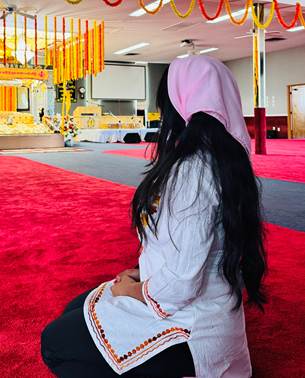
Note. Her courage helped open educational opportunities for girls from Dalit and other marginalised communities who faced caste and gender barriers. For me, her work reflects a calm but powerful form of resilience and hope for generations of women and girls.
Illustrated Learning Page
Sociology Connection
This chapter connects with Grade 11 Sociology topics including gender, caste, education, social reform, inequality, empowerment, dignity, and social change.
Discussion Questions
- Why was Savitribai Phule’s work important for girls’ education?
- Why did some people oppose girls going to school?
- How did education help girls gain confidence and dignity?
- How did Savitribai challenge both caste and gender inequality?
- What does this story teach us about courage and social change?
Reflection Activity
Write one paragraph explaining why Savitribai Phule’s work was important for the right to education. In your answer, include how education can help girls build confidence, dignity, and hope for the future.
References
Phule, S. (2016). Savitribai Phule and I. LeftWord Books.
Rao, P. (2008). Educating women and non-Brahmins as “loss of nationality”: Bal
Gangadhar Tilak and the nationalist agenda in Maharashtra. In S. Rege (Ed.), Education as trutiya ratna: Towards Phule-Ambedkarite feminist pedagogical practice. Krantijyoti Savitribai Phule Women’s Studies Centre.
Rege, S. (Ed.). (2008). Education as trutiya ratna: Towards Phule-Ambedkarite feminist pedagogical practice. Krantijyoti Savitribai Phule Women’s Studies Centre.
NDTV. (2023, December 5). Girls’ school once run by Jyotiba Phule, Savitribai razed for new memorial. https://www.ndtv.com/pune-news/bhide-wada-mahatma-jyotiba-phule-savitribai-phule-pune-first-school-in-india-for-girls-4634362
Learning Objectives
- Understand why Dalit women’s voices are important in learning about caste and gender.
- Explain how storytelling can become a form of memory, dignity, and resistance.
- Recognise that personal stories can reveal larger social realities.
- Reflect on why listening respectfully to marginalised voices can support social change.
Historical Background
For a long time, many Dalit women’s experiences were ignored or spoken about by others. Dalit women’s writing and storytelling changed this by allowing women to speak about caste, gender, labour, family, discrimination, survival, and dignity in their own voices. These stories help students understand that lived experience is also an important form of knowledge.
Story
The Voice That Refused to Stay Silent
This classroom story is inspired by Baby Kamble’s memoir The Prisons We Broke and Sharmila Rege’s work on Dalit women’s testimonios and storytelling.
For many years, she carried stories inside her. They were not easy stories.
They were stories of women waking before sunrise, working with tired hands, feeding children before feeding themselves, and carrying the weight of poverty, caste, and family responsibilities. They were stories of women who were strong, but rarely praised. Women who survived, but were rarely heard. She had seen how caste shaped people’s lives.
She had seen how Dalit families were treated as less important. She had seen how women carried double burdens because they were Dalit and because they were women. Outside the home, caste tried to keep them low. Inside the home, gender expectations often kept them silent. But silence does not mean there is no story. It only means someone has not been given the space to speak.
As she grew older, she began to understand that the memories of Dalit women mattered. The things women whispered while cooking, the stories they shared while working, the pain they carried quietly, and the hope they passed to their children were all part of history. Not the kind of history written only in official books.
This was history lived in homes, streets, fields, kitchens, classrooms, and communities. She decided that these stories should not disappear. She began to write.
She wrote about the women of her community. She wrote about their struggles, their anger, their humour, their strength, and their dreams. She did not write to make people feel pity. She wrote so people would understand. She wrote so the lives of Dalit women would no longer be hidden. Her words gave voice to women who had been ignored for generations.
Through storytelling, she showed that Dalit women were not only victims of caste and gender injustice. They were thinkers. They were workers. They were mothers, daughters, organizers, survivors, and memory keepers. They knew what injustice felt like because they had lived it. They also knew what strength meant because they had practiced it every day. Her writing became a way of saying, “We were here. We remember. Our lives matter.” That is the power of storytelling.
A story can protect memory.
A story can challenge silence.
A story can help others understand pain without reducing people to pain.
A story can turn one woman’s voice into a doorway for many voices.
For students, listening to Dalit women’s stories is important because it helps us learn beyond textbook definitions. It reminds us that caste and gender are not only ideas. They are lived realities that shape people’s bodies, choices, families, and futures. But storytelling also teaches hope. When Dalit women tell their stories, they are not only looking back. They are also creating space for future generations to speak with confidence and dignity. Her voice refused to stay silent. And because she spoke, many others could begin to listen.
Figure 1 Many Colors, Many Voices: When Silenced Voices Speak
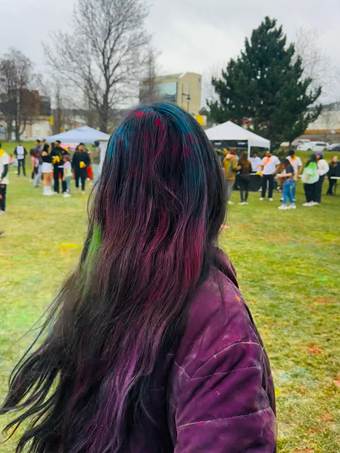
Note. I chose this Holi image because its many colours remind me of many voices coming together. Dalit women’s stories show beauty, resilience, courage, and the strength to speak even after being pushed into silence.
Illustrated Learning Page
Sociology Connection
This chapter connects with Grade 11 Sociology topics including caste, gender, voice, storytelling, lived experience, social exclusion, identity, dignity, resistance, and social change.
Discussion Questions
- Why are Dalit women’s voices important in understanding caste and gender?
- How can storytelling become a form of resistance?
- Why are personal stories important sources of knowledge?
- What does the story teach us about silence and voice?
- How can listening to marginalized voices help create a more inclusive society?
Reflection Activity
Write one paragraph explaining why storytelling matters in the struggle for dignity and social change. In your answer, include how Dalit women’s voices can help people understand caste, gender, memory, and resistance.
References
Kamble, B. (2008). The prisons we broke (M. Pandit, Trans.). Orient BlackSwan. Original work published 1986.
Rege, S. (2006). Writing caste/writing gender: Narrating Dalit women’s testimonios. Zubaan.