
Goal
Before learning about Dalit women’s educational experiences, students first need to understand the broader social context in which these experiences developed. This module provides that foundation by introducing the caste system, the history of the Dalit community, the contributions of Dr. B. R. Ambedkar, and the constitutional changes that challenged caste-based discrimination. Rather than presenting these topics only through textbook definitions, the module uses storytelling and historical narratives to help students connect sociological concepts with real human experiences. By the end of the module, students will have the background knowledge needed to understand the later modules on Dalit women’s education, identity, and social change.
Stories
Learning Objectives
- Understand the basic idea of the caste system.
- Explain who the Dalit community are in relation to the caste system.
- Recognise how caste affected people’s opportunities and everyday lives.
- Reflect on why equality and dignity are important today.
Historical Background
The caste system developed over many centuries in the Indian subcontinent. Over time, society became divided into hereditary social groups, and a person’s caste was generally determined by birth. Caste often influenced occupation, social status, and access to education and other opportunities. Some traditional Hindu texts, including the Manusmriti, describe society as being divided into four varnas and are often associated with the figure of Manu. However, historians and sociologists explain that the caste system developed gradually through a combination of religious beliefs, social customs, political power, and economic relationships rather than through one person or one event (Ambedkar, 1936/2004; Jodhka, 2016). Communities now known as Dalits were placed outside this social hierarchy and were historically treated as “untouchable.” Although untouchability was abolished under Article 17 of the Constitution of India in 1950, caste-based discrimination continues to affect many communities today (Constitution of India, 1950; Thorat & Newman, 2010).
Story
A long time ago, people in India began to organize society into different groups. At first, these groups were often connected with different kinds of work. Over many centuries, these groups became fixed, and a person’s place in society was usually decided by birth rather than by ability or choice (Thorat & Newman, 2010). People born into the higher castes often had greater access to education, land, and positions of influence. Many people from communities now known as Dalits were excluded from schools, temples, public spaces, and many social activities. They were expected to do difficult and low-paid work and were often treated unfairly because of their caste (Paik, 2009). Many people challenged this system. One of the most important leaders was Dr. B. R. Ambedkar. He believed education was the key to equality, dignity, and freedom. His work helped shape the Constitution of India, which abolished untouchability and guaranteed equal rights for all citizens (Ambedkar, 1936/2004). Today, students learn about the caste system in Sociology because it helps explain how social inequality develops and why equality, dignity, and inclusion matter. Learning about the caste system is not about blaming people. It is about understanding history, respecting different experiences, and working toward a more equal society.
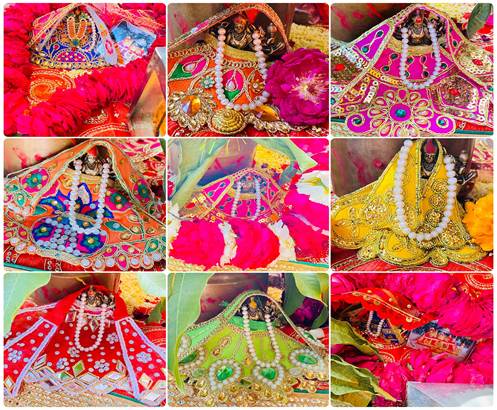
Figure 1. Goddess Durga in nine different dresses during Navratri, representing the broader cultural and religious context of Indian society.
Note. Personal photograph taken during Navratri, a nine-night Hindu festival in India. I included it because today I have the freedom to worship openly, while earlier generations in my Dalit community faced caste-based discrimination and exclusion from society.
Illustrated Learning Page
Sociology Connection
This chapter connects with Grade 11 Sociology topics including social stratification, caste, inequality, identity, social exclusion, and social change.
Discussion Questions
- What is the caste system?
- How did caste influence people’s opportunities?
- Why is it important to learn about the experiences of the Dalit community?
- How can education contribute to equality today?
Reflection Activity
Write one paragraph explaining one new thing you learned about the caste system and why understanding history is important for building a more inclusive society.
References
Ambedkar, B. R. (2004). Annihilation of caste. Navayana. (Original work published 1936). https://navayana.org/products/annihilation-of-caste
Constitution of India. (1950). Article 17. https://www.constitutionofindia.net/articles/article-17-abolition-of-untouchability/
Paik, S. (2009). Chhadi lage chham chham, vidya yei gham gham: Dalit women’s struggle for education. Indian Economic and Social History Review, 46(2), 175–204. https://doi.org/10.1177/097152150901600202
Thorat, S., & Newman, K. S. (Eds.). (2010). Blocked by caste: Economic discrimination in modern India. Oxford University Press. https://global.oup.com/academic/product/blocked-by-caste-9780198081692
Learning Objectives
- Understand who the Dalit community are in relation to the caste system.
- Explain how caste affected Dalit people’s everyday lives, dignity, and opportunities.
- Recognise how untouchability shaped access to education, water, public spaces, and social respect.
- Reflect on why Dalit voices and lived experiences are important for understanding equality and social justice today.
Historical Background
The Dalit community includes groups of people who were historically placed outside the traditional caste hierarchy and treated as “untouchable.” The word Dalit is often understood as a term connected to oppression, but it is also used as a word of dignity, identity, awareness, and resistance. Since Chapter 1 already explained the caste system, this chapter focuses on Dalit lived experience and shows how caste affected everyday access to water, education, public spaces, and respect (Ambedkar, 1990; Minority Rights Group, n.d.; Thorat & Newman, 2010).
Story
This story is inspired by Dr. B. R. Ambedkar’s autobiographical writing, Waiting for a Visa. In this text, Ambedkar shared personal experiences of untouchability and showed how caste discrimination affected even the most basic parts of life. As a child, I slowly began to understand that society did not treat everyone equally. I went to school like other children. I wanted to learn, read, write, and grow. But my caste followed me into the classroom. It affected where I could sit, how others treated me, and even whether I could drink water when I was thirsty.
For many children, drinking water was simple. They could go to the water pot or source and drink whenever they needed. But for children from communities treated as “untouchable,” water was not freely available. I could not touch the water myself. Someone from a higher caste had to pour it for me. If that person was not there, I had to wait. My thirst depended on someone else’s permission.
This was not only about water. It was about dignity. A basic human need became a reminder that society saw some people as less worthy than others. The problem was not only in one school or one village. Caste shaped many parts of life, including travel, housing, education, work, and public spaces. A person could study, work hard, and become educated, but caste discrimination could still follow them.
For Dalit communities, this history created deep pain, but it also created strength. People began to question why birth should decide a person’s worth. They asked why one group should be treated as pure and another as polluted. They asked why education, water, roads, schools, and dignity should belong only to some people.
Dr. B. R. Ambedkar became one of the strongest voices against this injustice. He believed that education was a path to equality and freedom. His life showed that Dalit communities were not without knowledge, courage, or leadership. They were communities with history, identity, strength, and a long struggle for human dignity. Today, when we ask, “Who are the Dalit community?” we should not only answer by saying that they were placed outside the caste system. We should also understand them as people who resisted discrimination, fought for education, protected their dignity, and helped shape the meaning of equality in modern India.

Figure 2: From Exclusion to Educational Opportunity
Note. My sister graduated from Thompson Rivers University in Canada as the first in our family to graduate from an international university. Her achievement reflects how education can open opportunities that earlier generations in our Dalit community had limited access to because of caste-based discrimination.
Illustrated Learning Page
Sociology Connection
This chapter connects with Grade 11 Sociology topics including caste, social stratification, social exclusion, identity, inequality, human dignity, resistance, and social change.
Discussion Questions
- Who are the Dalit community?
- How did untouchability affect everyday life?
- Why is water an important symbol in this story?
- How did Dr. B. R. Ambedkar challenge caste discrimination?
- Why is it important to learn about Dalit voices through stories?
Reflection Activity
Write one paragraph explaining how the story “Waiting for Water” helped you understand the Dalit community. In your answer, include why dignity, education, and equality are important when learning about social inequality.
References
Ambedkar, B. R. (1990). Waiting for a visa. People’s Education Society. Original manuscript written around 1935–1936. https://ccnmtl.columbia.edu/projects/mmt/ambedkar/web/texts.html
Minority Rights Group. (n.d.). Dalits in India. https://minorityrights.org/communities/dalits/
Thorat, S., & Newman, K. S. (Eds.). (2010). Blocked by caste: Economic discrimination in modern India. Oxford University Press. https://global.oup.com/academic/product/blocked-by-caste-9780198081692
Learning Objectives
- Understand Dr. B. R. Ambedkar’s role in challenging caste discrimination.
- Explain how the Mahad Satyagraha became an important moment in the fight for equality.
- Recognize how access to water, public spaces, and dignity are connected to human rights.
- Reflect on how constitutional rights can help challenge social exclusion and discrimination.
Historical Background
In 1927, Dr. B. R. Ambedkar led the Mahad Satyagraha, a historic movement where Dalit people asserted their right to drink water from the public Chawdar tank in Mahad. This event showed that equality was not only about ideas or speeches, but also about everyday rights such as drinking water, entering public spaces, and living with dignity. Later, Ambedkar played a major role in shaping the Constitution of India, which abolished untouchability through Article 17.
Story: The Day Water Became a Right
In the town of Mahad, there was a public water tank called the Chawdar tank. The water was meant for public use. But Dalit people were not allowed to drink from it. They lived in the same society, walked the same roads, worked hard like everyone else, and needed water like every other human being. Still, caste rules told them that they could not touch the same water source. For many people, this may have looked like a small issue. But for Dalit communities, water was not only water. It was dignity. It was equality. It was the right to exist in public life without shame.
In 1927, Dr. B. R. Ambedkar came to Mahad for a conference with Dalit community members and supporters. Thousands of people gathered there. They did not come only to listen to speeches. They came to claim a right that should never have been denied.
Ambedkar knew that equality could not remain only in books, speeches, or promises. If a public tank was legally open to everyone, then Dalit people had the right to use it. If public spaces belonged to the public, then caste could not decide who was human enough to drink water. After the meeting, Ambedkar and the people walked together toward the Chawdar tank. It was a simple walk, but it carried a powerful meaning. Each step challenged the idea that birth could make one person higher and another lower. Each step said that Dalit people were not asking for charity. They were asserting their rights.
When they reached the tank, Ambedkar drank the water. Others followed. For the first time, many Dalit people drank from a public source that had been denied to them for years. That moment changed the meaning of water. The water in the tank became a symbol of human rights. It showed that equality is not only about big words. Equality is also about everyday life: drinking water, entering school, walking on roads, sitting with dignity, and being treated as fully human.
But the struggle did not end there. Some people were angry that Dalits had used the tank. Opposition followed, showing how deeply caste discrimination was rooted in society. It also showed why social change needed both courage and law.
Years later, when India became independent, Ambedkar helped shape the Constitution of India. Article 17 abolished untouchability and made its practice forbidden by law. This was a major step from social exclusion toward constitutional equality.
The story of Mahad teaches us that rights are not always given easily. Sometimes people must stand together and claim them. Dr. Ambedkar’s fight reminds us that dignity is not a favour. It is a human right.

Figure 1: Water, Dignity, and Equal Rights
Note. This photograph was taken in India. I included it because water is at the heart of this story. The Mahad Satyagraha shows how something as basic as access to water became connected to caste-based discrimination, dignity, equality, and human rights.
Illustrated Learning Page
Sociology Connection
This chapter connects with Grade 11 Sociology topics including caste, social exclusion, collective action, human rights, equality, dignity, law, resistance, and social change.
Discussion Questions
- Why was access to water important in the Mahad Satyagraha?
- How did caste discrimination affect public life and basic rights?
- Why did Ambedkar believe equality needed both social action and legal protection?
- How did Article 17 challenge the practice of untouchability?
- What does this story teach us about dignity and human rights?
Reflection Activity
Write one paragraph explaining why the Mahad Satyagraha was an important moment in the fight for equality. In your answer, explain how water became a symbol of dignity, rights, and social change.
References
Ambedkar, B. R. (2004). Annihilation of caste. Navayana. (Original work published 1936). https://navayana.org/products/annihilation-of-caste
Constitution of India. (1950). Article 17. https://www.constitutionofindia.net/articles/article-17-abolition-of-untouchability/
Living Waters Museum. (n.d.). The Mahad Satyagraha: Claiming the right to water. https://www.livingwatersmuseum.org/
Moon, V. (Ed.). (1993). Dr. Babasaheb Ambedkar: Writings and speeches, Vol. 17, Part 1. Education Department, Government of Maharashtra.
Zelliot, E. (2004). Ambedkar’s world: The making of Babasaheb and the Dalit movement. Navayana.